
How I Got Sick
Things have been difficult for me since 2010 when I lost my grandma, the woman who raised me. My condition worsened when another grievous event happened in early 2013. I spiraled into a deep depression and became suicidal by 2014. The mental pain was unbearable; I was in anguish.
Logically, I knew I was sick, and I tried to find help. I went to a GP and told him that I was suicidal and needed help.
Believe it or not, this is how he responded: “But you don’t look suicidal to me!”
As I looked at him in disbelief, he continued, saying, “You should be grateful and think happy thoughts. Be positive! Don’t worry about it. It’s just all in your head.”
Well, he was right about one thing. It IS in my head. Depression is the sickness of the brain.
It was extremely hard to find support. Nobody understood what I was going through. My sickness worsened, and during my darkest times, at the deepest point of my depression, I used to hear voices. Voices that told me there was no hope, that I would never get better, voices that told me death was the only way out of the pain, voices that told me my family would be better off without me. For months, I suffered from mental anguish and a severe sense of isolation.
In August 2014, I read the news of Robin Williams’s death by suicide. What struck me was that instead of feeling shock or disbelief, I felt that I understood why he chose suicide. That was the moment I realized something was really wrong with me. I needed help.
The Battle
The first psychiatrist I saw was not a good fit. He just started to medicate me without a thorough examination, and it was a disaster! I got sicker as a result. I became determined to find the right treatment and persisted in looking for the right doctor. Thankfully, a friend who is a neurologist referred me to a psychiatrist who was a perfect fit. He is a very knowledgeable doctor, and more importantly, he is willing to work with his patients to find the right treatment.
The Challenge
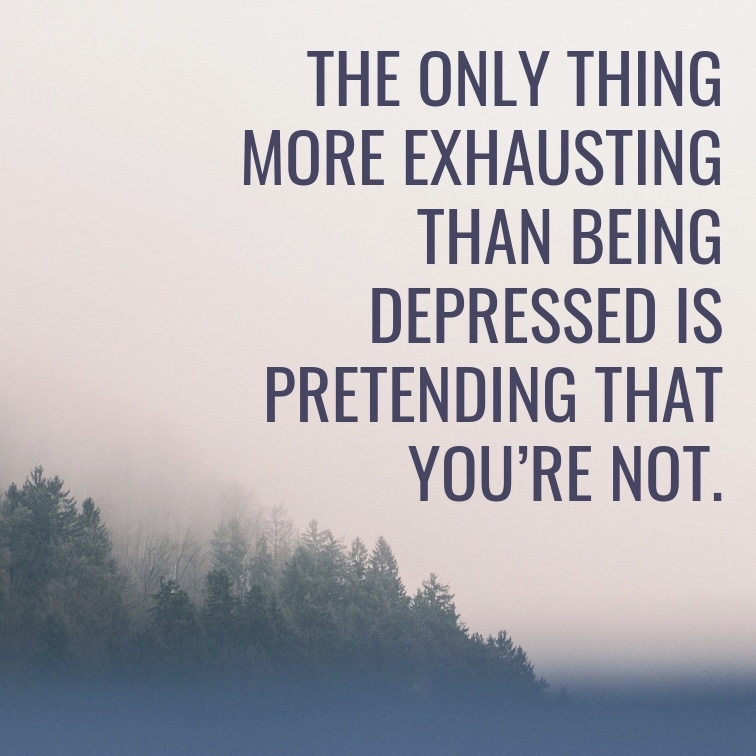
One of the problems with mental illness is that often you don’t get “better” right away. I experienced a large range of side effects from the medications we were trying. The doctor needed to keep changing the prescription, and we didn’t seem to be getting anywhere. I became so frustrated; it seemed that nothing we tried would work, and I began to despair.
My family knew that I was sick, but they didn’t know how to support me.
At the time, my job was teaching at a local university. I was still functioning, and though incredibly hard, I was still able to work. But other than that, I withdrew from the world.
Going into 2015, my battle with depression continued. Recovery felt impossible. At times, I felt like I made one step forward just to take two steps back. My cognition and the executive functions of my brain were declining. My short-term memory was severely affected.
Hitting Rock Bottom
My brain condition got so bad that year; teaching and mentoring became challenging. I also started to get anxiety on top of my depression, which made things worse.
I still remember that day; I stood in front of the class, about to start the lecture, when my brain went blank. I couldn’t remember anything about the lecture! Another lecturer had to take over my class.
I was crying on the way home. My brain was something I could always depend on. I was an honor student, the top graduate of my class, and I won a full scholarship to a graduate program in Canada; and yet there I was, unable to remember anything about the subject I was supposed to teach.
I felt so low; I just couldn’t see the light at the end of the tunnel. I started believing that my brain would never get better.
Light At The End Of The Tunnel
After months of trial and error, my psychiatrist and I figured out the right combination of medications and dosages for my brain condition. I finally got the right diagnosis, which is Bipolar Type 2, not just regular (unipolar) depression. Later on, I was also diagnosed with ADHD, the inattentive type.
As my depression lessened and my brain health improved, my cognition and executive functions started to recover. It took a couple more years to regain my full brain functions.
As I gained recovery, I decided to work as a mental health and recovery advocate.

Working with my team, our startup project, “LetsConnect,” combines technology and the knowledge we have on how to create effective mental health support systems. Our mission is to make mental health support available to anyone, anywhere, providing support even to those who are living in remote places.
I am really grateful to God, thankful to my psychiatrist, and deeply, utterly grateful to my peer supporters and my counsellors who supported me during my battle with depression.
I was able to get through even the worst moments because of them. Without their presence during those challenging, terrifying months, I don’t think I would have made it out alive.
I still have my brain disorders: Bipolar 2 and ADHD, and I will have them for the rest of my life. But that’s okay because I am now better at managing my conditions. Now, I ‘work with the brain I have.’
NOTE
I finally decided to write this story and share it because I want to give hope to those who are now in the middle of the struggle. It’s not easy, but it does get better, and yes, there IS light at the end of the tunnel.
Thank you for reading 🤗.
— 🌻 Sophie ❤️
 wwtbyh