Category Archives: Toward Understanding

Why talking about your negative feelings is healthy

NY Times Article: Why Talking About Our Problems Helps So Much (and How to Do It)
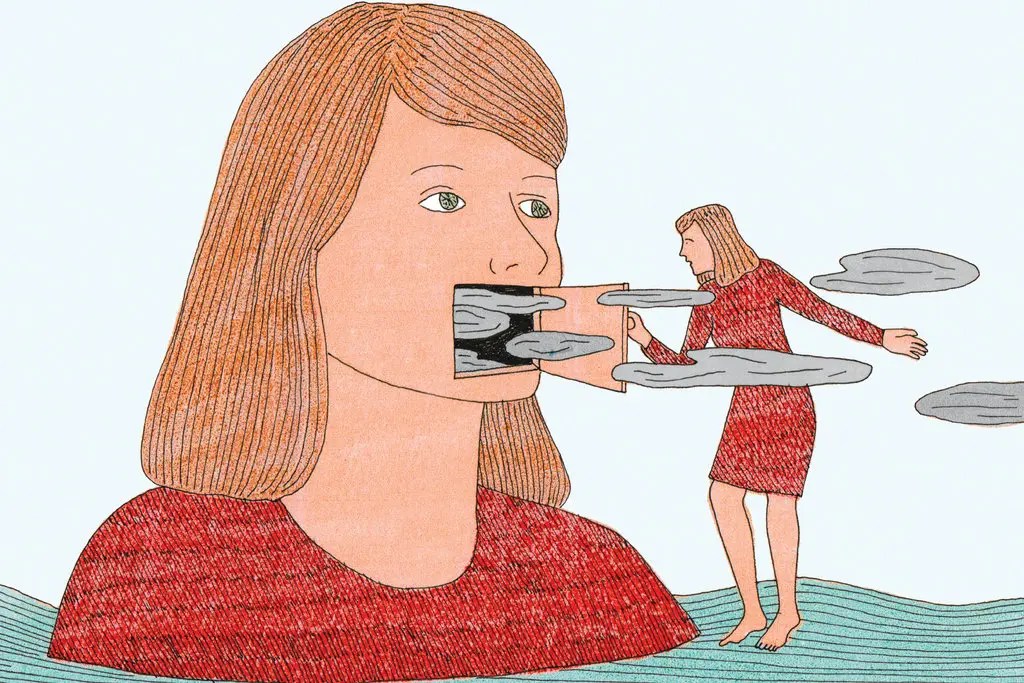
There’s more to the age-old advice to just “talk it out” than there seems. Here’s some of the evidence that explains why it is so helpful.

Excerpt from the article:

” … When you’re fighting the exhausting uphill battle against your own negative feelings, it can seem as if talking about it is the least productive thing you can do.

In reality, your brain and body get a lot out of talking.

When you are feeling very intense feelings — especially fear, aggression or anxiety — your amygdala is running the show. This is the part of the brain that, among other things, handles your fight or flight response. It is the job of the amygdala, and your limbic system as a whole, to figure out if something is a threat, devise a response to that threat if necessary, and store the information in your memory so you can recognize the threat later. When you get stressed or overwhelmed, this part of your brain can take control and even override more logical thought processes.

Research from U.C.L.A. suggests that putting your feelings into words — a process called “affect labeling” — can diminish the response of the amygdala when you encounter things that are upsetting. This is how, over time, you can become less stressed over something that bothers you. …”


My Encounter With Postpartum Depression

“I can’t do this! Someone else would be a better mother for him. He deserves a better mom, not someone like me. I know nothing about being a mom. I don’t know how to do this! He deserves someone better, and that’s not me.”

I remember that afternoon vividly. I was sitting on the couch in my psychiatrist’s office, sobbing uncontrollably. Through tears, I confessed that I wanted to give up my baby for adoption because I truly believed someone else could be a better mom to Aidan. Day after day, my thoughts spiraled, telling me I wasn’t good enough for him. He deserved a “real mom”—someone who could love and care for him properly.

Dr. C listened to me empathetically, as she always did. It was only my third appointment with her after being referred by my GP and midwife. They had grown increasingly concerned about my condition following Aidan’s birth.

Continue reading My Encounter With Postpartum Depression

Borderline Personality Disorder – Taming the Beast

In my opinion, BPD is one of the most stigmatized and misunderstood brain disorders out there. Because it is a Personality Disorder, even the person who suffers from it, often is not aware that he/she has it.

Toby Allen, an illustrator who decided to deal with explaining and conquering such mental illness types as depression, borderline personality, and anxiety disorder by recreating them as cute monsters drew BPD as the picture above.

I can’t agree more. I think BPD is one of the most challenging beasts to deal with.

Having said that, I also believe that it is NOT impossible to tame this beast. And in fact, when this beast is tamed, you can use its power and ability to your advantage.

I like to use the story of Newt and Zouwu as a metaphor.

In the movie “Fantastic Beasts 2”, Newt Scamander was facing Zouwu, a monstrously large feline beast, as big as an elephant, with a striped body, scraggly mane, four fangs that curl out of its mouth, long sharp claws, and a disproportionately long, ruffled multicolored tail. Zouwus are terrifying for most human beings, but they are incredibly powerful and fast, capable of travelling 1,000 miles in a day.

Zouwu is a powerful beast. When Newt first met him, Zouwu was wreaking havoc and scaring many people, seemed to be totally uncontrollable.

Continue reading Borderline Personality Disorder – Taming the Beast

A Letter from A Loved One with BPD

pic credit: beliefnet

To My Loved Ones:

I am writing this letter to help you understand what those of us with borderline personality disorder (BPD) go through. It is a severe mental illness, and yet describing it is often very difficult to put into words.

Studies have shown that people diagnosed with BPD actually have brains that differ from that of the general population. The part of our brain that deals with emotional responses is overactive, meaning that we are highly sensitive and our emotions are extremely intense and unstable. The prefrontal cortex is the part of the brain that is responsible for reasoning and logic. It is this part of the brain that will stop people from behaving in a certain way due to consequences. In those of us with BPD, this part of our brain is underactive—meaning we are unable to think rationally and often act out without thinking of the consequences.

I feel this is important to tell you, as so many people are misinformed regarding this disorder, with a few questioning whether BPD is even a thing, due to the fact that you cannot “see” our mental health. If you were to see inside our brain, however, you would realize that BPD is there.

Continue reading A Letter from A Loved One with BPD