Early-2006, during a bout of depression, a young lady by the name of Crystal Nunn wrote a desperate letter to Stephen Fry. Says Crystal:
“I had no idea who to turn to. But I really needed someone to turn to and to ease the pain. So I wrote to Stephen Fry because he is my hero, and he has been through this himself. And low and behold, he replied to my letter, and I will love him eternally for this.”
Someone asked me about the cover picture of WorkWithTheBrainYouHave Community Page. I posted. that picture, mentioning 7 different brain disorders: ADD/ADHD, Bipolar, Anxiety, Depression, Borderline Personality Disorder, Autism, and OCD.
The reason I put them there is because those are the 7 conditions that I am the most familiar with.
As I mentioned before, DISCLAIMER: I AM NOT A DOCTOR OR A MENTAL HEALTH PROFESSIONAL.
I am a person who has Bipolar type 2, ADD (Inattentive ADHD), and Social Anxiety.
I have a son who has HFA – High Functioning Autism, and I have various friends who have these various brain disorders: Autism, Male Borderline Personality Disorder, Major Depressive Disorder, Anxiety Disorder and Obsessive Compulsive Disorder.
I also experience bouts of depression, anxiety and at times ‘mixed states’ which in simplified explanation means having a bout of depression and anxiety at the same time.
Those are the conditions that I have, at different times, researched and studied in the past 5 years. I use my findings to help me and my friends in our recovery. I am now sharing them here in the hope that they can help others in their journey of recovery.
There are literally hundreds of different kind of brain disorders, and unfortunately I don’t know all of them because I have never researched them. But there is tons of information in the internet and you can also get information from your doctor.
Sadly, there is a lot of stigma around the word “mental illness”.
The word ‘mental’ means ‘relating to the mind’, and as a slang in English language, it means ‘crazy or insane’.
I prefer to use the term “brain disorder” to explain the condition/illness. Because in reality, that is the truth: mental illness/disorder is the illness/disorder of the brain.
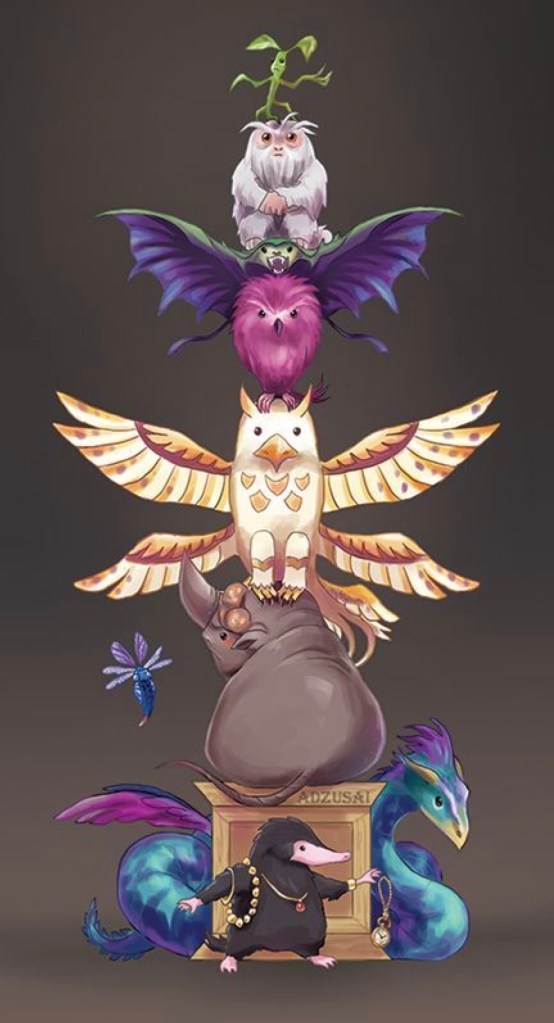
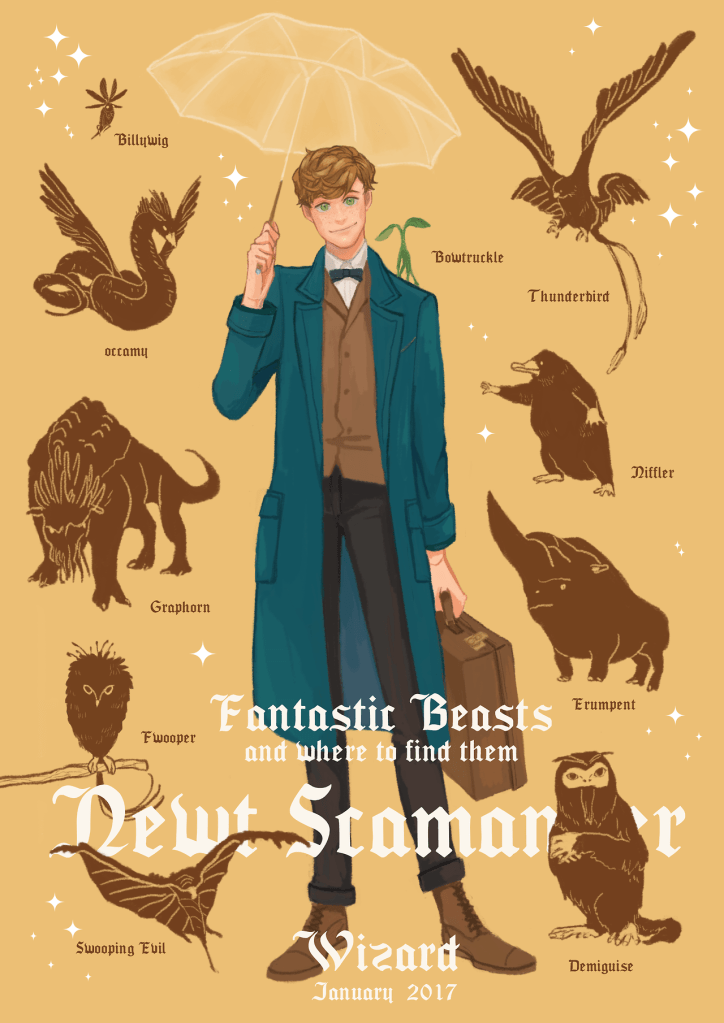
I was so excited when the movie ‘Fantastic Beasts’ came out in late 2016. I like to think the various brain disorders that we have as the various creatures in the story.
Newt Scamander was the nerd who studied and cared for many different beasts that many others preferred to stay away from.
It was because of his knowledge, humility and perseverance, he was able to tame those beasts; and at times needed, he can also use their special ability or power for good purpose.
pic credit: Iris Red
PS
You are free to use any resources from my Blog and FB Page as long as you give proper credit and put link back to the Blog / FB Page.
“… ADHD and BPD share some clinical features, particularly impulsivity and emotional instability. These disorders often co-occur. Patients with both diagnoses have more pronounced difficulties which are intertwined and often difficult to treat. In particular, impulsivity seems to be a severely impairing characteristic of patients suffering from both disorders. In BPD, impulsivity is primarily driven by affective and interpersonally sensitive aspects. In ADHD, deficits in attentional and cognitive processing account for behavior inhibition problems, referred to as impulsivity. …”
The results from our study confirm that people with ADHD have differences in their brain structure and therefore suggest that ADHD is a disorder of the brain,” added Dr Hoogman. “We hope that this will help to reduce stigma that ADHD is ‘just a label’ for difficult children or caused by poor parenting. This is definitely not the case, and we hope that this work will contribute to a better understanding of the disorder.”
Writing in a linked Comment Dr Jonathan Posner, Columbia University, USA, said: “It is the largest study of its kind and well powered to detect small effect sizes. Large sample sizes are particularly important in the study of ADHD because of the heterogeneity of the disorder both in etiology and clinical manifestation. This study represents an important contribution by providing robust evidence to support the notion of ADHD as a brain disorder with substantial effects on the volumes of subcortical nuclei. Future meta- and mega-analyses will be required to investigate medication effects as well as the developmental course of volumetric differences in ADHD.”
…
All 3,242 people had an MRI scan to measure their overall brain volume, and the size of seven regions of the brain that were thought to be linked to ADHD — the pallidum, thalamus, caudate nucleus, putamen, nucleus accumbens, amygdala, and hippocampus.
…
The study found that overall brain volume and five of the regional volumes were smaller in people with ADHD — the caudate nucleus, putamen, nucleus accumbens, amygdala and hippocampus.
The differences observed were most prominent in the brains of children with ADHD, but less obvious in adults with the disorder. Based on this, the researchers propose that ADHD is a disorder of the brain, and suggest that delays in the development of several brain regions are characteristic of ADHD.
It’s a rigid way of perceiving things. It means someone always has to be “good” and another has to be “bad.”
…
Learning to Cope with Black-and-White Thinking
Sometimes when I get into this mode of perception, I’ll write down my distorted thought and rewrite a different way of perceiving the situation. Here are some examples of reimagining these beliefs in a new way.
“I hate you, I love you” can be instead: “I love you and sometimes you really frustrate me. I dislike your behavior right now, it’s hurtful to me. I can be frustrated and dislike what you’re doing but still love you.” There’s room for all of this.
“You are perfect I must be evil” becomes: “No one is perfect. No one is evil. I’m doing my best and so are you. We’re having a disagreement right now and that’s okay. No one is ‘bad’ here. We’re just not seeing eye to eye right now and that’s part of life.”
The Angel vs Devil Complex: This is really just a twist on all things, situations, and people as either all good (perfect) or all bad (evil). My therapist always reminds me: “No one is all good or all bad. There’s no such thing. You have good parts and bad parts; you’re a human being.”




 wwtbyh