There’s more to the age-old advice to just “talk it out” than there seems. Here’s some of the evidence that explains why it is so helpful.
Excerpt from the article:
” … When you’re fighting the exhausting uphill battle against your own negative feelings, it can seem as if talking about it is the least productive thing you can do.
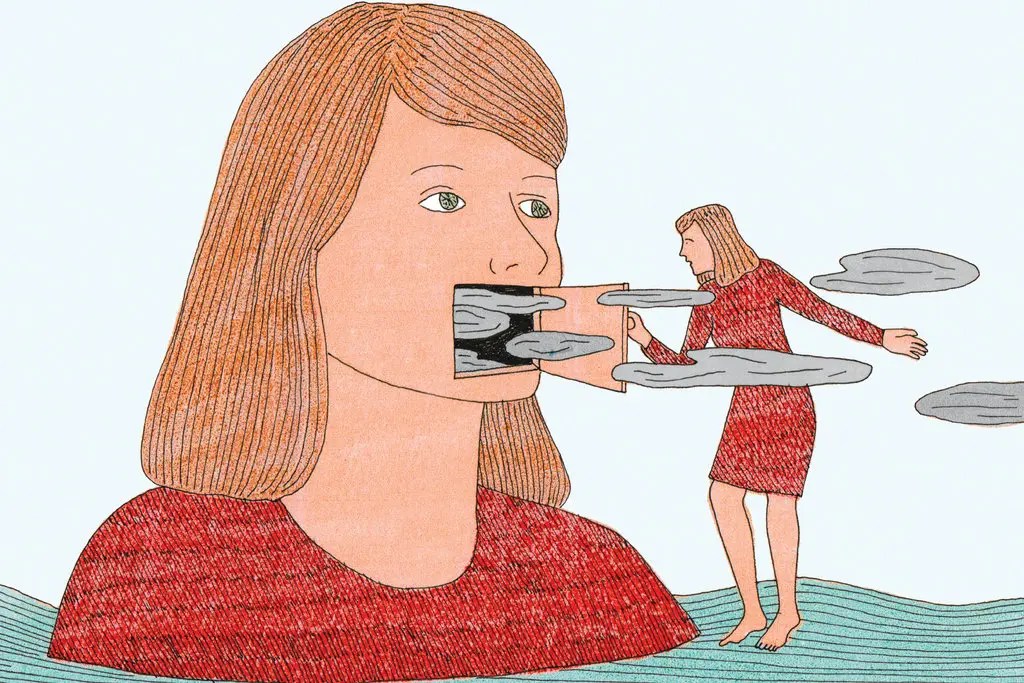
In reality, your brain and body get a lot out of talking.
When you are feeling very intense feelings — especially fear, aggression or anxiety — your amygdala is running the show. This is the part of the brain that, among other things, handles your fight or flight response. It is the job of the amygdala, and your limbic system as a whole, to figure out if something is a threat, devise a response to that threat if necessary, and store the information in your memory so you can recognize the threat later. When you get stressed or overwhelmed, this part of your brain can take control and even override more logical thought processes.
Research from U.C.L.A. suggests that putting your feelings into words — a process called “affect labeling” — can diminish the response of the amygdala when you encounter things that are upsetting. This is how, over time, you can become less stressed over something that bothers you. …”
I found this interesting article about Radical Acceptance, and I would like to share it with you.
Radical Acceptance is one of the skills in DBT, and just like any other skill, the more you practice it, the better you will become at it.
Here’s a snippet from the article:
Coping Statements to Foster Radical Acceptance
Here is a list of coping statements you can use when you are feeling as though you can’t accept situations and move on. Keep these handy with you so that you can use them in the moment when you are feeling out of control.
When I fight against negative emotions, I only fuel them to grow larger.
I can’t change the things that have happened in the past.
I am able to accept the present moment exactly as it is.
I can get through difficult emotions even if it is hard.
I will get through this no matter what.
I will survive and this feeling will fade even though this feels painful right now.
It’s possible for me to feel anxiety but still manage this situation in an effective way.
It’s possible for me to accept what happened and still end up happy.
I can choose to make a new path even if I feel bad.
When I remain rational I am better able to make good choices and solve problems.
It’s better to take the right actions than keep judging or blaming.
I hope this article will help as you’re building your skill to be able to radically accept difficult things in your life:
“ …It’s one of the deadliest diseases on the planet, often still shrouded in a sense of shame. And for men under 35, suicide following depression is now the leading cause of death. Novelist Matt Haig recounts his own experience of suicidal thoughts and the long path to recovery… “
“… I am not anti pill. I am pro anything that works and I know pills do work for a lot of people. There may well come a time where I take pills again. For now, I do what I know keeps me just about level. Exercise definitely helps me, as does yoga and absorbing myself in something or someone I love, so I keep doing these things. I suppose, in the absence of universal certainties, we are our own best laboratory. If you are a man or a woman with mental health problems, you are part of a very large and growing group. Many of the greatest and, well, toughest people of all time have suffered from depression. Politicians, astronauts, poets, painters, philosophers, scientists, mathematicians (a hell of a lot of mathematicians), actors, boxers, peace activists, war leaders, and a billion other people fighting their own battles. You are no less or more of a man or a woman or a human for having depression than you would be for having cancer or cardiovascular disease or a car accident.
So what should we do? Talk. Listen. Encourage talking. Encourage listening. Keep adding to the conversation. Stay on the lookout for those wanting to join in the conversation. Keep reiterating, again and again, that depression is not something you “admit to”, it is not something you have to blush about, it is a human experience. It is not you. It is simply something that happens to you. And something that can often be eased by talking. Words. Comfort. Support. It took me more than a decade to be able to talk openly, properly, to everyone, about my experience. I soon discovered the act of talking is in itself a therapy. Where talk exists, so does hope. …”
EXCERPTS “…In the UK, the male suicide rate is its lowest since 1981 – 15.5 deaths per 100,000. But suicide is still the single biggest killer of men under the age of 45. And a marked gender split remains. For UK women, the rate is a third of men’s: 4.9 suicides per 100,000.
It’s the same in many other countries. Compared to women, men are three times more likely to die by suicide in Australia, 3.5 times more likely in the US and more than four times more likely in Russia and Argentina. WHO’s data show that nearly 40% of countries have more than 15 suicide deaths per 100,000 men; only 1.5% show a rate that high for women.”
Men are more likely to die of suicide than women. – This reality bothers me so much,
We, both men and women, together as a community must do something about it.
If you’re a man and you struggle , please join our FB group. It’s a small online community of amazing, compassionate people.
I am also going to start a section on our resource library WorkWithTheBrainYouHave dot com for men, depression, & suicide.
EXCERPTS: Taking care of yourself while helping a friend means recognizing that your own needs are also important. Supporting someone might require a lot of your time and energy and it can be easy to neglect your own self-care. Self care can be anything that helps to rebuild or sustain your emotional, physical, mental, social or spiritual balance.
1. Find BALANCE:
The key is to try to strike a balance between your responsibilities, and those things that help to recharge and maintain our health (like exercising, connecting with friends, finishing that book you’re reading, etc.) If you’re so consumed with helping a friend that you’re neglecting other parts of your life, you’ll get tired and resentful.
2. Set BOUNDARIES:
This means establishing healthy limits, such as being able to tell someone when they are behaving in a way that you are struggling with or find upsetting. Knowing what your limits are, communicating them clearly, and knowing what is and isn’t acceptable are all part of defining and setting boundaries.
3. Know what RESCUE vs. SUPPORT means:
As much as you might wish you could “fix” someone or “fix” things for them, you can’t do someone else’s emotional work for them. The thing to remember though – and this is the trickiest thing about caring for someone who is going through a hard time – is that your friend’s emotional state is beyond your control. Rescuing means over-helping and can actually take away from another person’s self-determination. It is not helpful and can create a dependency rather than a healthy relationship or a healthy way of dealing with mental illness.
4. Remember your OWN NEEDS:
It can become easy to neglect your own needs while helping someone deal with mental health issues. You might even feel guilty for focusing on your own needs, thinking that your friend or family member is in a worse spot than you are. Or perhaps they are even making you feel guilty for it. Set boundaries and stick to them, and make room in your life to do things that are important to you.
5. Remember that you’re NOT ALONE:
It can take more than one person to support someone going through a tough time. It’s not all up to you. Share the experience by reaching out to other friends, family members, teachers, guidance counsellors, family doctors or a counsellor/ therapist. Remember that if you are feeling overwhelmed, you can reach out and talk to someone. Even if your friend refuses to get help, you can still get support for yourself while being there for them.




 wwtbyh